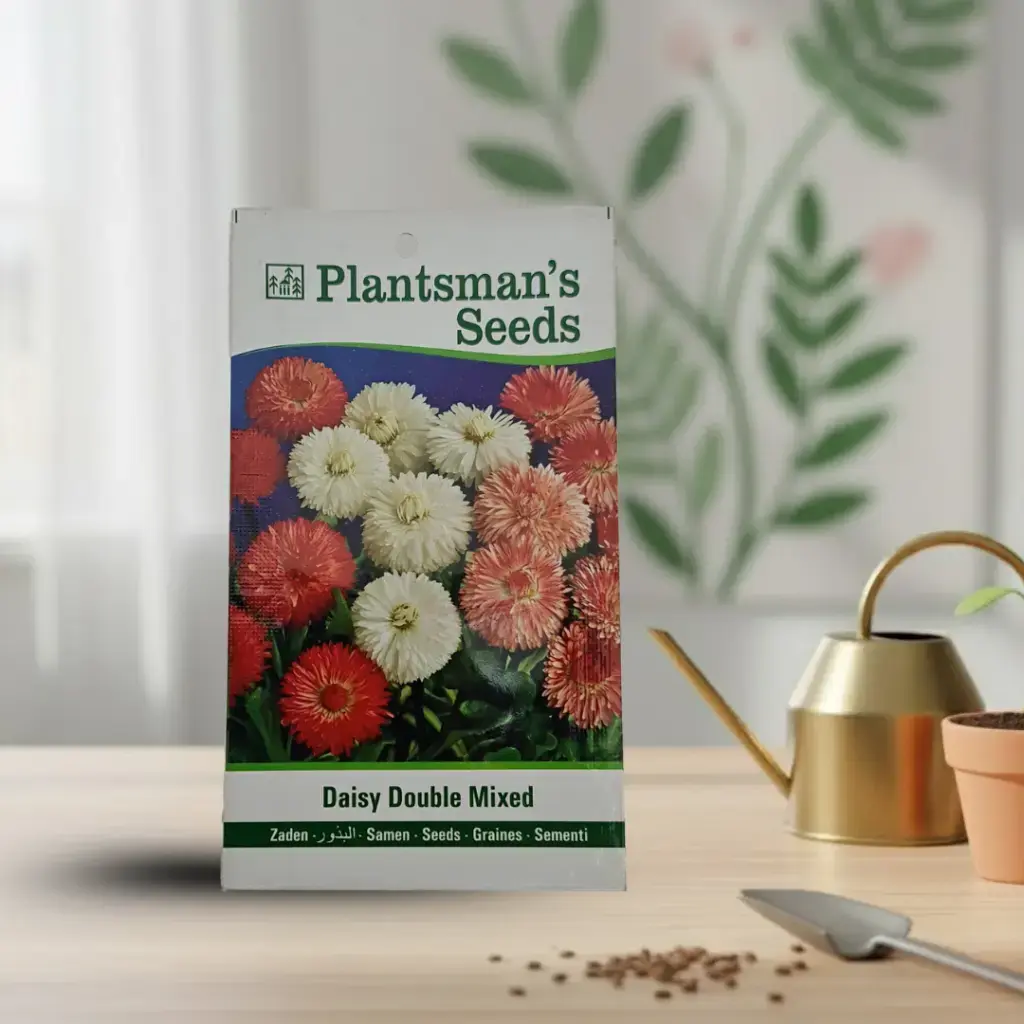
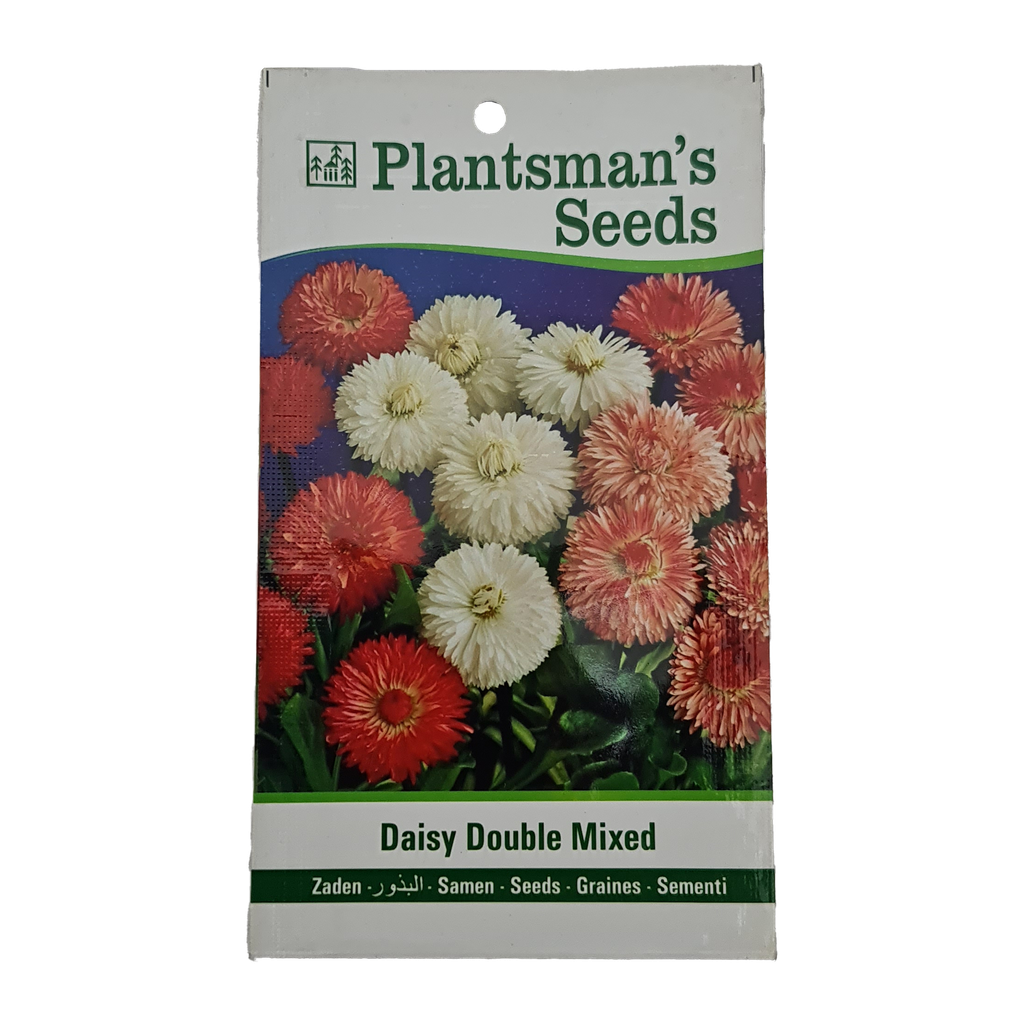

Growing Daisy Double Mixed from seeds is a great way to brighten up your balcony or terrace garden in India! These charming, frilly flowers come in a variety of colors and bloom beautifully during the cool season. Here's your complete India-specific guide for growing them:
Best Time to Sow
North India: September to November
South & West India: October to December
(Daisies love cooler weather and bloom well in winter–spring)
What You’ll Need
Daisy Double Mixed seeds
Seed-starting pots or trays
Final containers (6–8 inches deep minimum, with drainage holes)
Light, well-draining potting mix (Well-draining, loose soil mixed with compost and cocopeat)
A sunny spot (balcony, terrace, windowsill)
Sow the Seeds
Fill seed trays with the potting mix.
Sprinkle seeds lightly over the surface.
Cover with a very thin layer of soil (about 0.5 cm).
Mist gently with water to moisten the soil.
Keep in a bright spot with indirect sunlight.
Ideal temp: 15–22°C
Keep soil slightly moist, not wet.
Germination time: 10–14 days
Once seedlings have 2–3 true leaves, transplant them into bigger pots.
Use 6–8 inches pots or larger.
Spacing: Leave 15–20 cm between plants.
Care After Transplanting
Sunlight
Needs 4–6 hours of direct sun daily.
Place in a sunny balcony or terrace.
Watering
Water when top inch of soil feels dry.
Avoid waterlogging—ensure pot has good drainage.
Feeding
Start feeding 2–3 weeks after transplanting.
Use balanced liquid fertilizer every 2–3 weeks (NPK 10-10-10 or vermi-tea).
Deadheading
Regularly remove faded flowers to encourage new blooms.
Care Tips
Overwatering – leads to root rot or fungal problems
Aphids or mites – spray neem oil weekly if needed
Powdery mildew in humid conditions – ensure good airflow