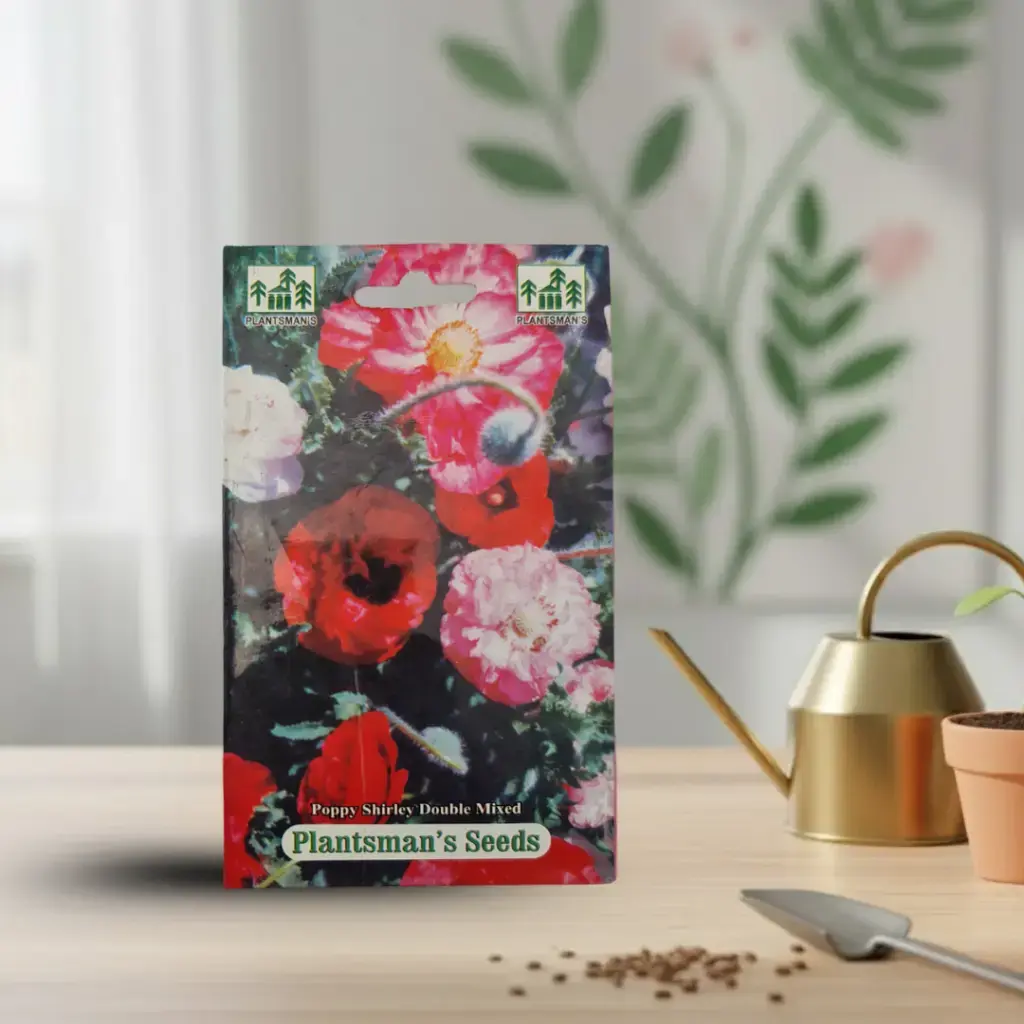



Growing Poppy Shirley Double Mixed from seeds in containers in India is a beautiful way to enjoy delicate, tissue-paper-like blooms in soft pastel and vivid colors. These annuals are easy to grow during the Indian winter season and are perfect for pots or balcony planters. Here’s your step-by-step guide, tailored for Indian growing conditions:
Best Sowing Time
Ideal Season: October to December
Grows best in cool, dry weather (temperatures: 10–25°C)
Perfect for North, Central, and parts of South India during winter
Container & Soil Setup
Pot Size: Minimum 10–12 inches deep with drainage holes
Soil Mix:
2 parts garden soil
1 part sand or cocopeat (for drainage)
1 part compost/vermicompost
Soil should be loose, well-draining, and not too rich (poppies don’t like heavy, nutrient-dense soils)
Sowing the Seeds
Surface Sow: Sprinkle seeds directly on top of the moist soil.
Do Not Cover Deeply: Lightly press seeds down or cover with a very fine layer of soil or sand.
Water Gently: Mist with a spray bottle to avoid displacing seeds.
Germination Time: 7–14 days
Keep in Partial Shade during germination, then shift to a sunny location after sprouting.
Sunlight
Needs 5–6 hours of full sun daily
Prefers cool mornings and light afternoon shade in warmer areas
Watering
Keep the soil consistently moist, but not soggy
Water at the base once seedlings are established
Avoid overhead watering on blooms
Plant Care Tips
- Thinning: Thin seedlings to 6-8 inches apart once they grow 2-3 true leaves
- Fertilizer: Very light feeding once every 2-3 weeks (avoid over fertilizing)
- Pests: Generally, pest-free but may attract aphids – use neem spray if needed
- Deadheading: Promote longer flowering
Blooming Time
Flowers appear in 8–10 weeks
Bloom through winter and early spring
Double-layered petals in shades of pink, white, red, mauve, and purple